Ask ten Manhattan property owners what masonry repair costs and you will hear ten very different numbers — and most of them are right. A few hundred dollars of targeted repointing on a brownstone stoop and a six-figure facade restoration on a pre-war co-op are both “masonry repair.” This guide explains what actually drives masonry repair cost in Manhattan, the price factors owners consistently underestimate, and how to budget for work that protects your building instead of patching it twice.
What Counts as Masonry Repair?
Masonry covers the brick, stone, and concrete block your building is built from. Typical repair scopes include repointing failed mortar joints, replacing spalled or cracked bricks, rebuilding parapet walls, repairing chimneys and stone stoops, and restoring lintels. If you are still diagnosing your building, start with our guide to the signs of masonry damage — or go straight to our masonry contractors in Manhattan page for the full service breakdown.
The 6 Factors That Drive Masonry Cost in Manhattan
1. The type and amount of repair
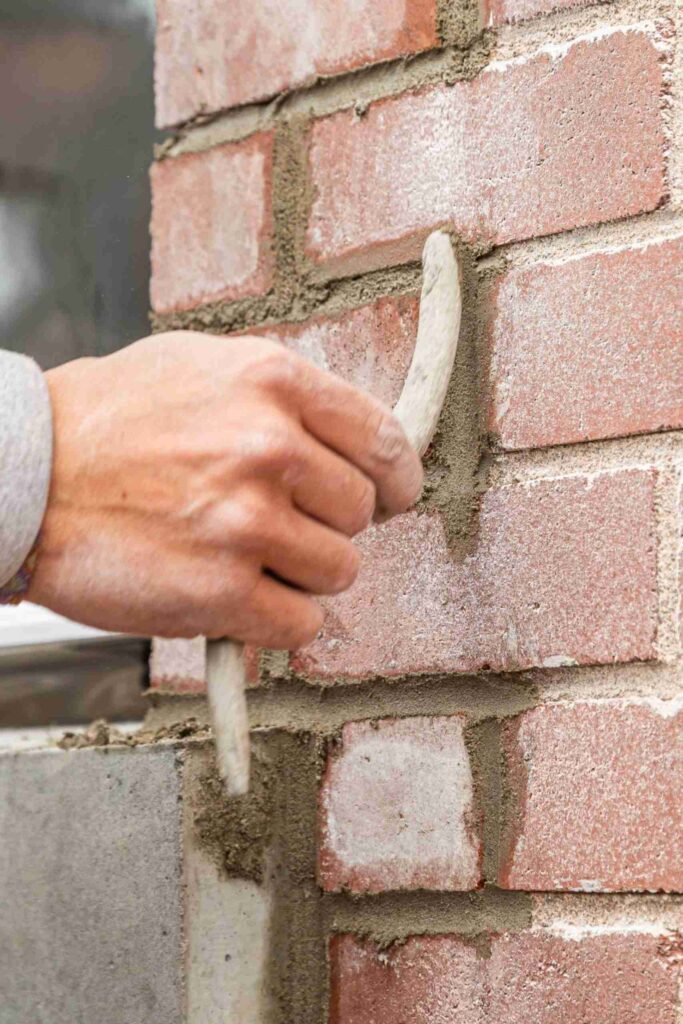
Repointing is priced very differently from rebuilding. Cutting out and replacing mortar across a small wall section is straightforward labor; removing and replacing hundreds of damaged bricks, or demolishing and rebuilding a parapet, multiplies materials, time, and disposal. The single biggest cost question is always: how much wall is actually affected?
2. Access — the Manhattan multiplier
On a one-story property, a ladder may be enough. On a six-story facade, you may need pipe scaffolding, a suspended scaffold, or a boom lift — plus sidewalk sheds and NYC Department of Buildings permits for the scaffold itself. Access can rival the repair cost on tall buildings, which is why combining work (for example, repointing while a parapet wall repair is already underway) is usually the smartest way to spend money once, not twice.
3. Matching historic materials
Manhattan’s brownstones and pre-war buildings need mortar matched to the original mix and bricks matched for size and color. Using the wrong mortar — too hard for soft historic brick — causes the brick faces to spall and turns a modest repair into a major one within a few winters. Proper matching costs a little more today and saves a facade tomorrow.
4. Structural vs. cosmetic damage
A hairline crack in a joint is cosmetic. Stair-step cracking, bulging walls, and separated corners signal movement that must be corrected before the surface is restored. Structural work involves investigation, sometimes engineering input, and rebuilding — not just repointing. Honest contractors separate these clearly in the estimate, the way we do in our exterior repair and renovation scopes.
5. Building approvals and filings
Co-ops and condos require board approval and contractor documentation before exterior work starts. Landmarked buildings may need Landmarks Preservation Commission approval for visible changes, and some facade work triggers DOB filings. These steps add time and modest administrative cost — but skipping them risks stop-work orders that cost far more.
6. Waterproofing and related systems
Masonry rarely fails alone. Failed flashing, leaking coping, and a deteriorated roof edge pour water into the wall from above. If the water source is not fixed, new mortar will fail early. Budgeting for the connected fix — often roof repair or coping replacement — is what makes a repair last decades instead of seasons.
Repair Now vs. Later: The Real Math
Mortar joints that have washed out let water into the wall assembly. Every freeze-thaw cycle then pries bricks and stone further apart, and interior plaster damage, mold, and heat loss follow. Owners who repoint at the “cracked and crumbling” stage typically spend a fraction of what owners pay after bricks begin spalling and sections need rebuilding. In masonry, deferral is never neutral — it is a loan with very high interest.
How to Get an Accurate Masonry Estimate
A reliable quote requires a site visit. Photos help a contractor triage, but mortar depth, brick condition behind the surface, and access realities only show in person. Expect a proper estimate to be itemized — separating urgent structural work from cosmetic items — so boards and owners can phase intelligently. At Spark Construction Manhattan, inspections and written estimates are free; request yours on our contact page.
FAQs
Is repointing cheaper than brick replacement?
Yes, significantly. Repointing renews the mortar joints while keeping sound bricks in place. Replacement adds material cost and labor for removing and resetting units, and is only necessary where bricks are cracked, spalled, or loose.
Does masonry repair need a permit in NYC?
Minor cosmetic repointing often does not. Structural rebuilding, scaffold-supported facade work, and changes to landmarked buildings can require NYC DOB filings or Landmarks approval. Your contractor should flag these during the inspection.
How long does masonry repair take?
A stoop or single wall section may take a few days. Multi-story facade programs run several weeks depending on access, weather, and mortar curing time, which should never be rushed.
Can masonry work be phased to fit a budget?
Yes. A good estimate separates safety and water-intrusion items from cosmetic work, so you can complete urgent repairs now and schedule the rest — as long as the sequencing protects the wall in the meantime.
Get a Clear Number for Your Building
Guessing at masonry costs from the internet only goes so far. If your brickwork is cracking, your mortar is washing out, or your board needs a real figure for next year’s budget, contact Spark Construction Manhattan for a free inspection and itemized estimate.